I was responding to your statement that in z224 his right arm was in a normal position so it could not be an indicator of a reaction. I agree that his left hand/arm is about where it was before the first shot, e.g. z193. But I disagree that his right arm and right hand was in a normal position in z224. It was not in the same position it was in before the first shot. You had said:It appears to me that in z224 JFK is already reacting because his right hand is in a semi-clenched position And if there is anything to doubt about that we can see it from his fully clenched right hand and facial expression that is already showing reaction in z225. But we cannot determine when he first visibly reacts because we cannot see anything for the second prior, from z207 to z223. It could be that his reaction begins when he turns forward just before he disappears behind the sign by z207 and that it started gradually and built up to the gagging we see at z227 and after. That could be due to the accumulation of blood in the wind pipe or the interference with breathing when he took his next breath. We don't know when his reaction began except that it began sometime between z193 and z224.
I'm really surprised you've decided to adopt a strategy of misrepresenting what I'm saying in order to avoid the arguments I'm putting forward. It seems totally unreasonable but I will put the argument forward again as I believe it 's of great importance in determining when JFK was first hit.
I have clearly been talking about monitoring the position and movement of JFK's
left arm/hand in order to determine when JFK first reacts to being hit. It is JFK's left arm/hand that hold the key to understanding when JFK first reacts to being hit. But you keep trying to turn it into an argument about his
right arm/hand (which I will turn to shortly).
It seems to me JFK spends a lot of the motorcade sat in this position:
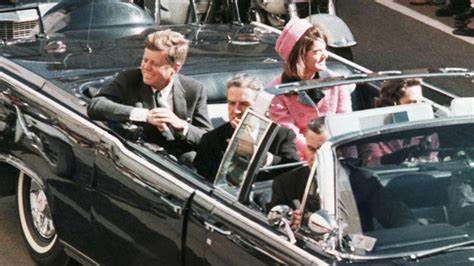
He is sat right in the corner, his right arm over the side of the limo, his
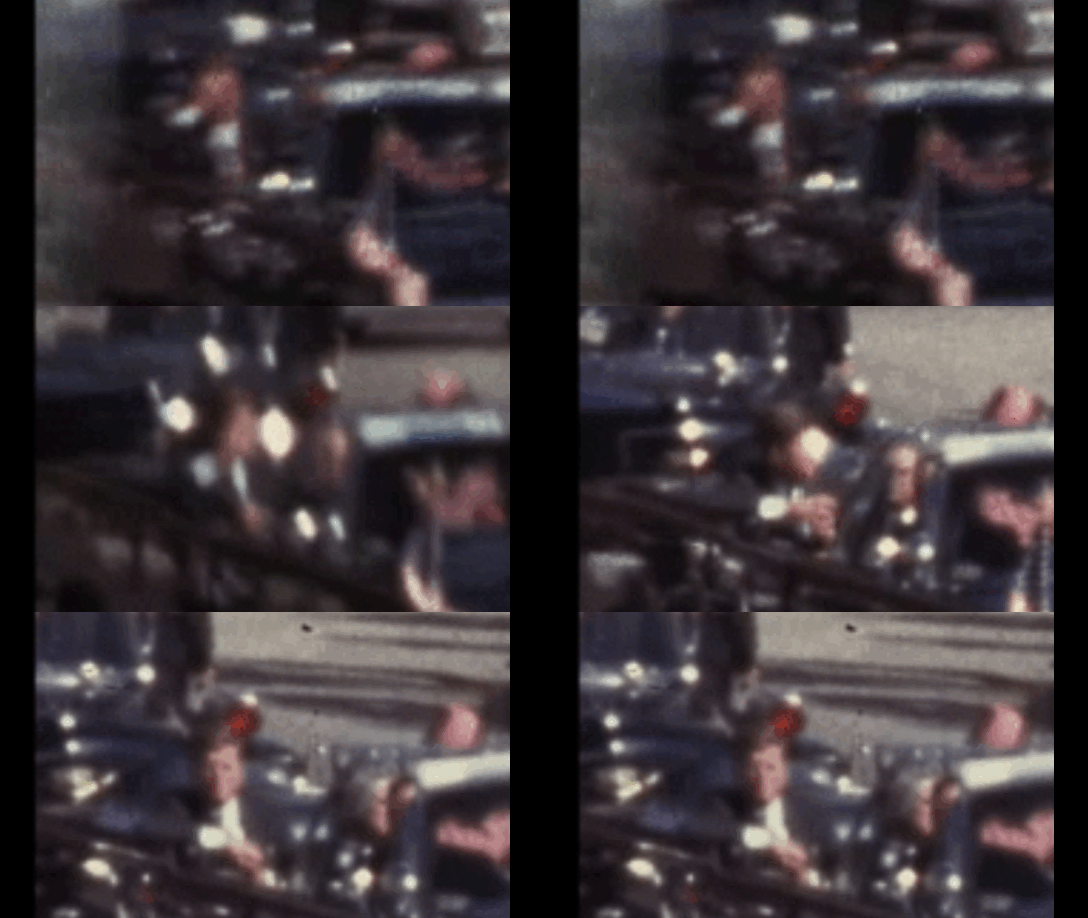
left arm down by his side. It seems comfortable and his right hand is free to wave at the crowd as he passes. In the clip from the Z-film below (z133-162) we see JFK's
left arm is down by his side from the outset. JFK brushes his hair with his right hand then clasps his
left hand, his
left arm being down by his side:
JFK's left arm remains down by his side as he passes behind the side:
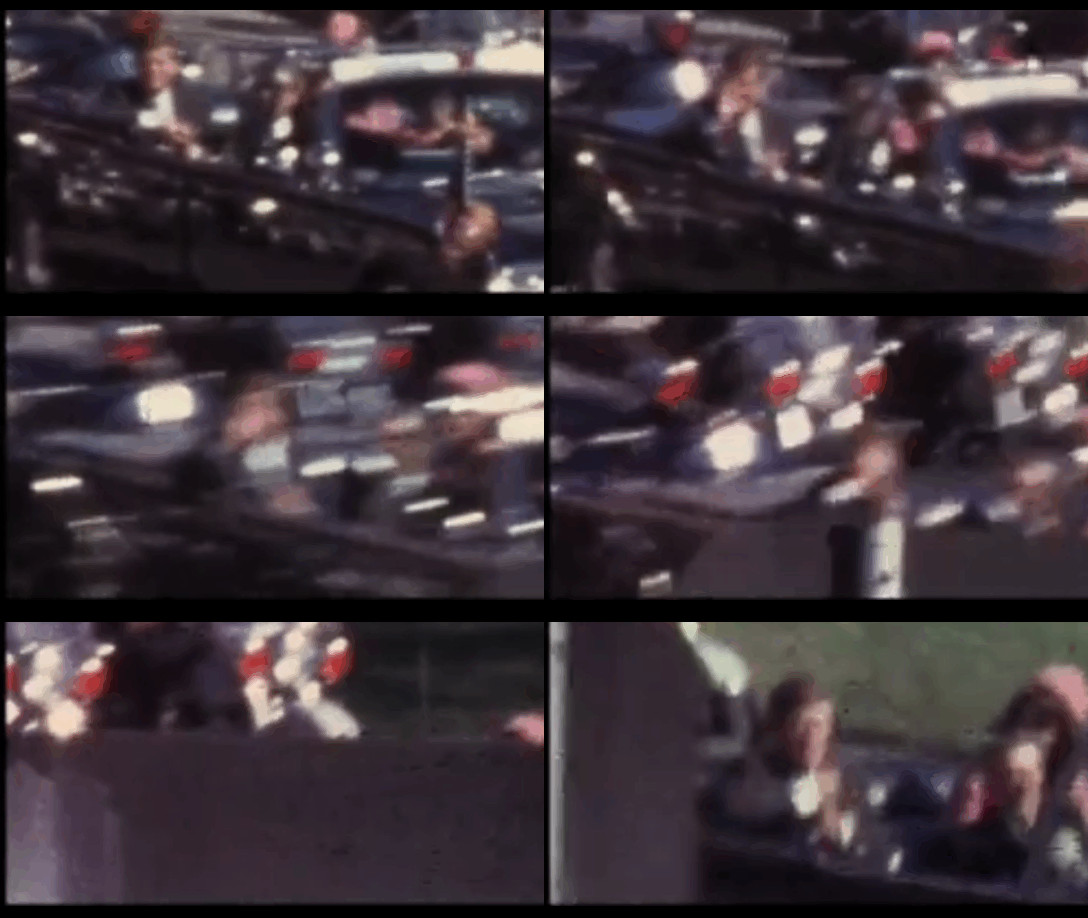 For the duration of the Z-film (that shows the presidential limo), until he passes behind the sign, JFK's left arm is down by his side.
As he emerges from behind the sign his left arm is in the same position (this pic is from z225):
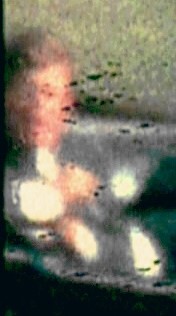
Then, within a fraction of a second, we see his left elbow rocket up in an extraordinary way. We both agree that the first shot strikes JFK, passing through his throat. JFK's reaction to this shot is quite startling - his hands clench into fists which he jams under his chin area as his elbows fly up in the air in quite an extraordinary fashion, his whole upper body becoming temporarily rigid before relaxing slightly. It is a really extreme and rapid reaction:
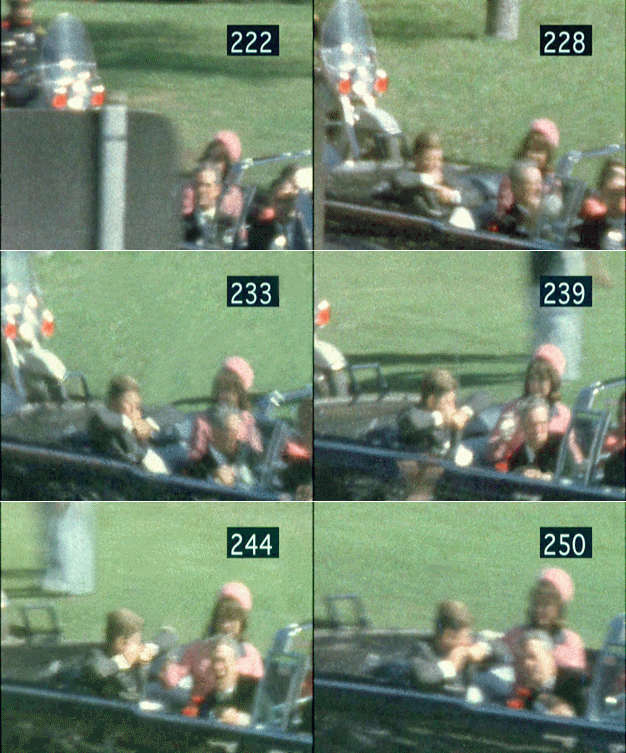
It really is an extraordinary and profound reaction. There can be little argument it is a reaction to being shot. The pic below shows how extreme the reaction is:
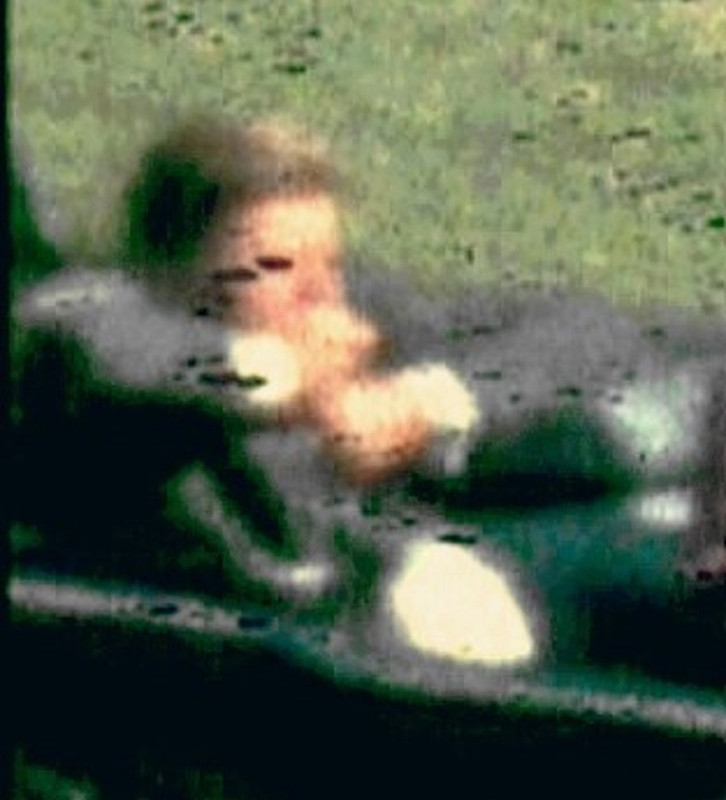
This pic is from z232. As we have seen, at z225 JFK's left arm is down by his side yet at z232, less than half a second later his left elbow is thrust up to what appears to be it's maximum extension (try replicating this position, I know I can get my left elbow barely any higher than JFK's and that's really trying).
Less than half a second to get his left elbow from a resting postion at his side to, what I am assuming is, it's maximum extension. Trying to do this with a conscious effort is barely possible but in JFK's case, this is done from a resting position with no expectation that this reaction will be happening. From a completely relaxed state to rigidity in less than half a second.
This incredibly rapid reaction, when we have seen his left arm is down by his side for the duration of the Z-film up to z225, is indicative of a reflex reaction to being shot.

